
The short answer
Picked over means somebody already removed the cards worth removing: the holos, the chase cards, sometimes the whole modern era. It is not fraud and it is not unusual. Almost all bulk on the open market has been picked at least once.
What matters is the price. A picked lot at 2 cents a card is a normal purchase. The same lot at 8 cents is somebody selling you their leftovers at fresh prices.
Every bulk buyer learns this word after their first disappointing box. Here is how to tell before you pay instead of after.
The four signals
| Signal | What it suggests |
|---|---|
| Almost no reverse holos | Someone pulled the finish that holds a floor |
| Heavy on basic energy | Filler left behind after the playables came out |
| One era only, and an old one | The recent cards were separated and sold on |
| Suspiciously clean condition | Not a red flag by itself, but it means the lot was handled card by card |
The reverse holo ratio is the most reliable of the four. In an unpicked modern lot they are the bulk of the box, as our own inventory breakdown shows.
Why picked bulk still sells
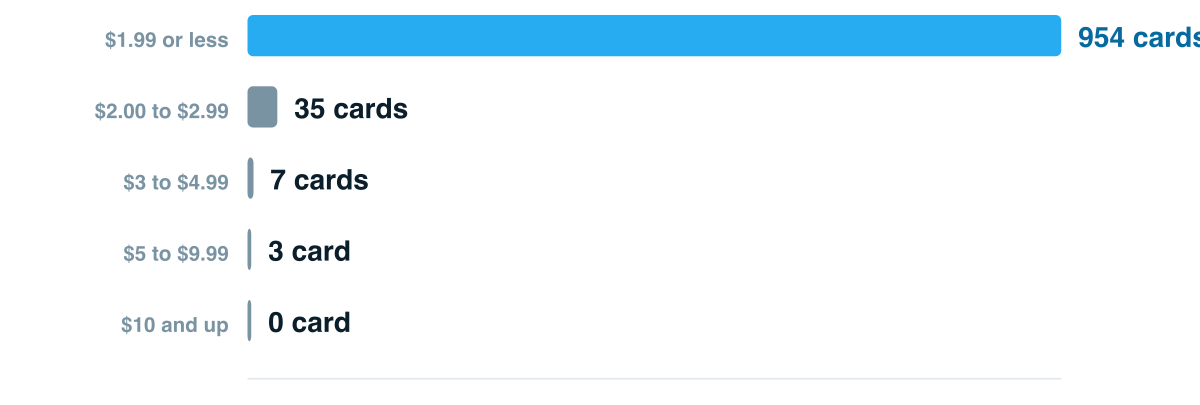
Because the floor is the business. Even after the good cards leave, the remainder is thousands of listable cards, and 975 of every 1,000 cards were going to price at the floor anyway.
What picking removes is the tail: the 5 cards per thousand above $3. That tail is a real part of the value but it is not most of it, which is why picked bulk has a legitimate price rather than no price.
What to pay for it
Discount from the unsorted rate rather than from the sorted one. If fresh modern unsorted is 4 cents, a clearly picked lot is 1 to 2, and anything above 5 needs a reason you can verify.
Ask the seller directly: what came out of this? The answer, and how readily it comes, tells you as much as the cards do. Our buying guide covers the two questions worth asking every time.
Fresh lots do exist
The exception is a collection bought directly from the person who assembled it. Someone clearing a childhood binder has usually pulled the two cards they recognised, which means everything else is untouched, and that is genuinely fresh bulk.
It is also why buyers chase collection buyouts rather than bulk listings. If a seller can tell you the cards came straight out of a house rather than out of another dealer's leftovers, that is worth paying for.
What we do when we buy a picked lot
We still buy them, at picked prices. A repeat seller who tells us honestly what came out is worth more to us than a one time lot that turned out to be lighter than described, because the second one costs us a scan of every card to find out.
That is the quiet economics of it: honesty is cheaper for both sides than an inspection.
The honest version from our side
When we sell bulk, we say what we pulled. It costs us a slightly lower price and it saves an argument, a return and a buyer who never comes back, which is a trade we will make every time.
Picked over is a category, not an accusation. Price it as one.
Frequently asked questions
- What does picked over mean in Pokémon bulk?
That someone already removed the valuable cards, usually the holos and anything marked ex, GX or V. Almost all bulk sold on the open market has been picked at least once.
- How can I tell if bulk has been picked?
Four signals: very few reverse holos, lots of basic energy, a single old era, and cards that look individually handled. The reverse holo ratio is the most reliable.
- Is picked over bulk still worth buying?
Yes, at the right price. 975 of every 1,000 cards were going to price at the floor anyway; picking removes the 5 cards above $3, which is real value but not most of it.
- What should I pay for picked bulk?
Discount from the unsorted rate, not the sorted one. If fresh unsorted modern is 4 cents a card, clearly picked is 1 to 2 cents.