
The short answer
Price a bulk lot per card, not as a percentage of anything. 1 to 5 cents for unsorted modern commons, 5 to 15 cents for sorted reverse holos, 15 to 50 cents for sorted holos and rares.
Then say the count, the era and what you already pulled out. Those three facts move a bulk listing more than the price does.
Selling bulk is the opposite of selling a single. Nobody is looking for a specific card, they are buying a probability, so your job is to describe the probability accurately.
Start from the count, not the value
Weigh or count the lot properly. Buyers work in thousands, and a listing that says "big lot of Pokémon cards" gets ignored by every serious buyer because they cannot price it.
If counting a thousand cards sounds tedious, count one hundred, measure the stack, and multiply. Say it is approximate. Approximate and stated beats exact and hidden.
Price it against what a buyer will earn
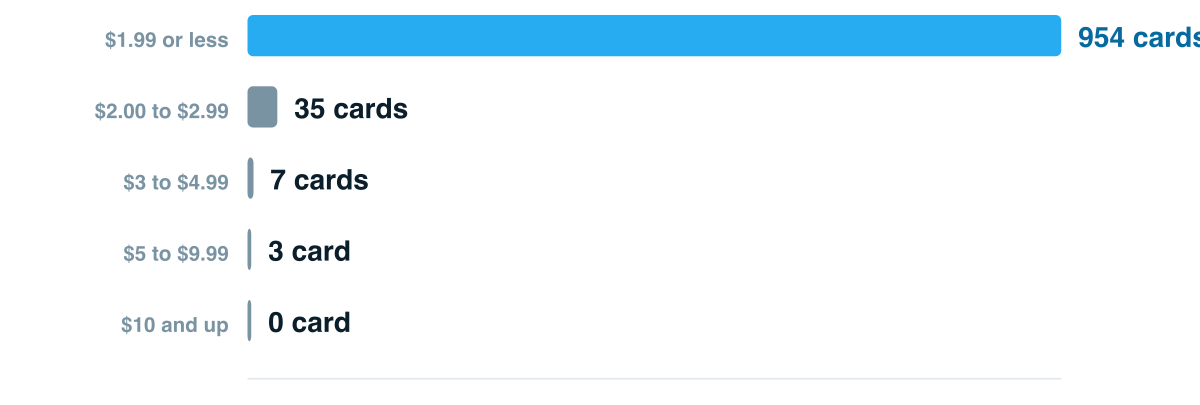
A buyer paying 5 cents a card for a thousand cards is spending $50 to get roughly 24 cards worth more than the floor and 975 that are not. They will not go much above that, and now you know why.
The exception is a genuinely unpicked lot. Those are rare and worth more, but you have to prove it, which brings us to the honest part.
Say what you took out
Every seller pulls something. Saying "I removed the holos and anything with ex or V" makes your listing more credible, not less, and it filters out the buyers who would have complained afterwards.
Silence on this point reads as concealment to anyone who has bought bulk before, and those are the buyers with money. Picked over is not an insult, it is a category.
The four things a good bulk listing states
| Fact | Why a buyer needs it |
|---|---|
| Card count, exact or estimated | It is the unit the whole price is built on |
| Era or set range | Decides the reverse holo ratio and the filler ratio |
| What was removed | Sets expectations and prevents returns |
| Whether energies are included | Basic energy is filler and buyers discount for it |
Do not forget the shipping
A thousand cards weigh close to two kilos, and shipping that across the country can cost more than the lot is worth. Price with postage in mind, offer local pickup if you can, and say the weight in the listing so nobody is surprised.
This is the single most common reason a bulk sale falls through after the buyer says yes. Work it out before you list, not after.
Where to sell it
eBay for reach, Facebook groups for local pickup without fees, and direct to a buyer who takes volume regularly if you have more than a few thousand. Remember eBay takes 21.5% plus shipping, and shipping a heavy box of commons eats a bulk price fast.
Price it so a buyer can make money and the lot sells in a week. Price it like a treasure hunt and it sits for months, which for bulk is the same as not selling it at all.
Frequently asked questions
- How much should I sell my bulk Pokémon cards for?
1 to 5 cents a card for unsorted modern commons, 5 to 15 cents for sorted reverse holo, and 15 to 50 cents for sorted holo and rare bulk.
- How do I count a large bulk lot?
Count one hundred cards, measure that stack, then multiply by the height of the whole lot. State that the figure is approximate; approximate and stated beats exact and hidden.
- Should I say that I removed the good cards?
Yes. Every seller pulls something, and stating it makes the listing more credible and prevents returns. Buyers can tell within one page anyway.
- Where is the best place to sell bulk?
eBay for reach, Facebook groups for local pickup without fees, and direct to a volume buyer above a few thousand cards. Remember eBay takes 21.5% plus shipping, and heavy boxes eat a bulk price fast.
Before accepting a price it helps to know what you would keep selling it yourself: the eBay profit calculator gives you that floor.