
The short answer
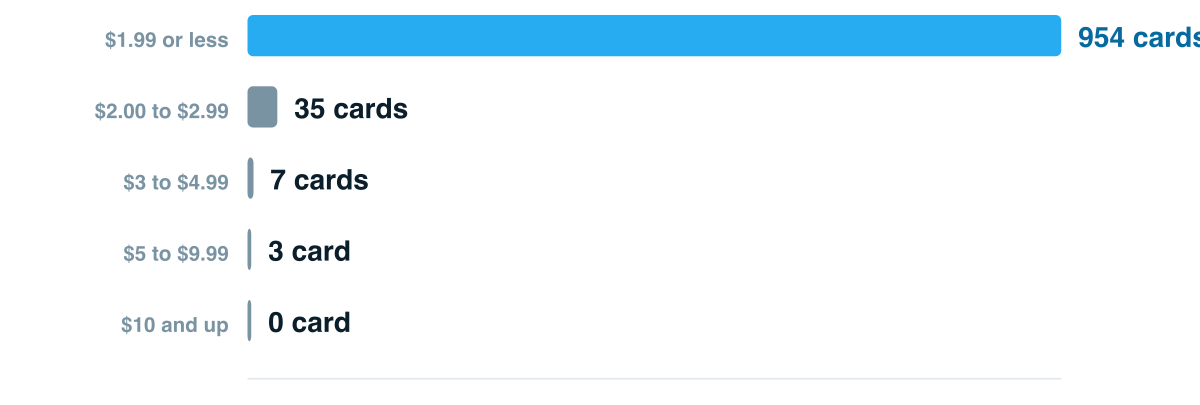
Unsorted bulk is worth buying only if your own time is cheap or your process is fast. Sorting 1,000 cards by hand takes most people three to five hours, and in our inventory that work uncovers about 5 cards worth more than $3.
If sorted bulk costs 5 cents more per card than unsorted, you are being asked to pay $50 per 1,000 to skip those hours. For most people that is a fair trade.
This is the first real decision a bulk buyer makes, and the answer is arithmetic rather than opinion.
What sorting actually buys you
Sorting does not create value, it finds it. In a thousand modern cards there are about 24 cards worth more than the floor, and the job is separating them from 975.
Doing it well means checking finish, set and number on every card, which is exactly why a repeatable sorting method matters more than speed.
The hourly maths
| Unsorted at 3 cents | Sorted at 8 cents | |
|---|---|---|
| Cost per 1,000 | $30 | $80 |
| Your time | 3 to 5 hours | None |
| What you are paying per hour saved | n/a | About $10 to $17 |
| Best for | High volume, fast process, patience | Small buyers, weekends, testing a source |
Nobody tells you the real cost of unsorted bulk, which is that the sorting time is not optional. It just moves to you.
When unsorted is clearly right
If you scan and list at scale, unsorted wins, because the sorting is already inside a process you run anyway. That is our situation and it is why we buy at $0.08 a card.
It also wins when you are buying from a source nobody has picked, which is rare and worth paying for. Ask the two questions we ask every seller before assuming a lot is fresh.
Making the sorting fast enough to matter
The gap between three hours and five is entirely method. Sort once by finish, into three piles, and do not price anything while you sort. Deciding value card by card is what turns an afternoon into a weekend.
Then price only the two piles that can clear the floor. In our inventory that is the reverse holos and the holos; the non foil pile goes straight to the bulk box without a second look, because 975 cards per 1,000 end at the floor anyway.
When it is a trap
Unsorted from a seller who sells bulk professionally has been through a machine or a person already. You are buying the remainder, which is fine at 2 cents and a bad deal at 8.
And if you plan to sell the good cards individually, remember that only 2.9% of listed cards sell per month. Sorting faster does not make them sell faster.
Buy unsorted for volume. Buy sorted for time. Just do not pay sorted prices for a lot somebody else already sorted.
Frequently asked questions
- Is unsorted Pokémon bulk worth it?
It is worth it if you sort at scale or your time is cheap. Sorting 1,000 cards takes most people three to five hours, so paying about $50 more per 1,000 for sorted bulk works out to $10 to $17 an hour saved.
- How long does it take to sort 1,000 Pokémon cards?
Three to five hours by hand for most people, checking finish, set and number on each card. Speed comes from a repeatable method rather than from working faster.
- How many good cards will I find sorting bulk?
In our inventory about 24 cards per 1,000 are worth more than the $1.99 floor, and only 5 clear $3. Sorting finds value, it does not create it.
- Should beginners buy sorted or unsorted bulk?
Sorted, usually. It costs more per card but it lets you test a source and a process without committing a weekend, and the price difference is small on a small order.