

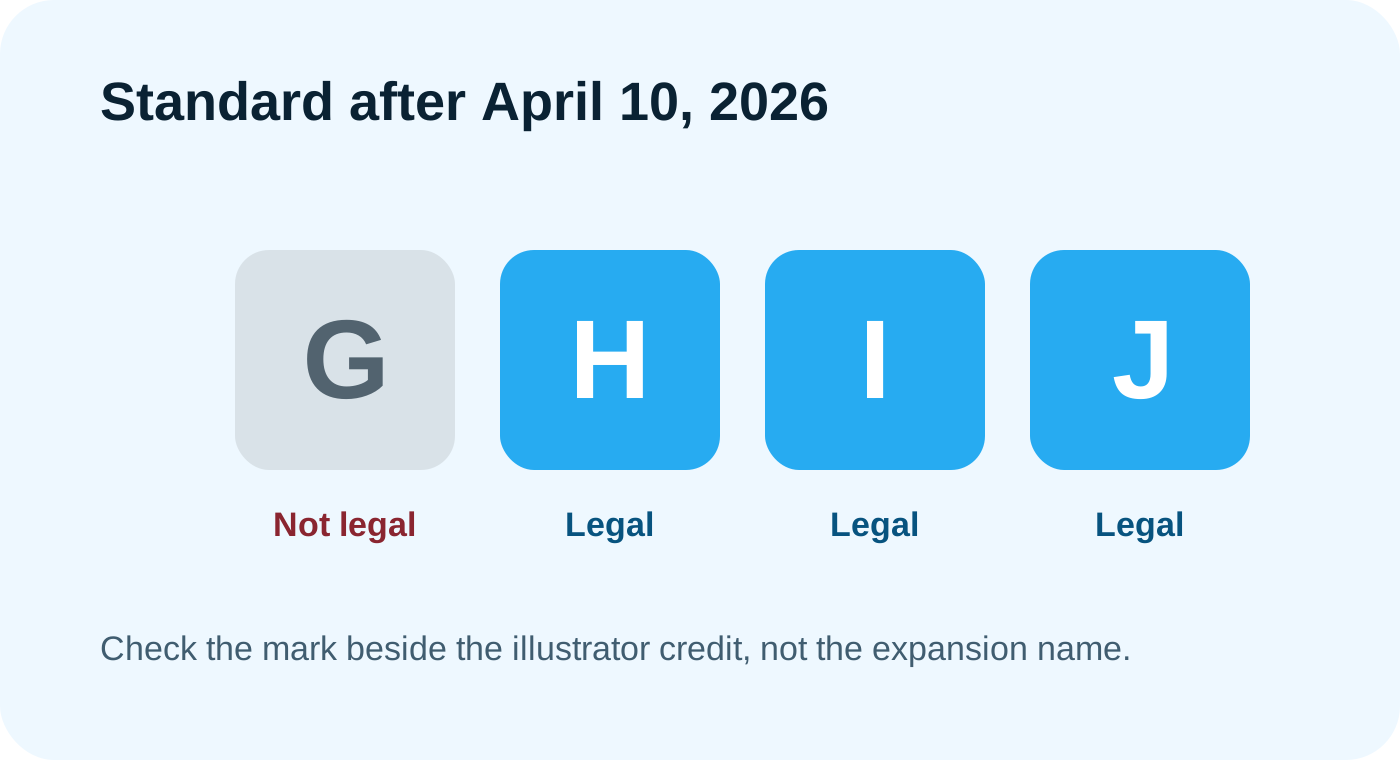
The 2026 Standard format rotation took effect April 10. Every card carrying a G regulation mark in the small letter printed near the illustrator credit stopped being legal for sanctioned Standard play. Cards marked H, I and J remain legal.
Why this matters for pricing, not just for players
A card losing tournament legality doesn't make it worthless, it just narrows the buyer pool to collectors and Expanded format players instead of the wider Standard tournament crowd. That's usually a real, if modest, price step down for anything that was trading on competitive utility rather than art or rarity alone. Checking a card's regulation mark before pricing a competitively relevant single takes ten seconds and avoids listing it at a pre rotation comp that no longer applies.
No new bans, one Expanded change
The Standard banned list didn't change with this rotation. The one notable move was in Expanded: Medicham V, across its three printings in Evolving Skies, was banned from that format specifically. If you're not selling into the Expanded scene, that one doesn't move your inventory.
Paper events and TCG Live changed on different days
The digital rotation began in Pokémon TCG Live on March 26, fifteen days before the change reached sanctioned events on April 10. That gap was intentional. It gave players a place to test the new format before sitting down at a tournament. Deck lists copied during those two weeks need a date attached because a list could be legal online and still reflect the outgoing paper format.
The expansion name is not the legality test. A recent product can contain a card with an older mark, while an old printing can remain playable because a current printing has the same name and function. Rare Candy from Sun and Moon is the official example: the older copy remains usable because Rare Candy in Mega Evolution carries an I mark. Boss's Orders works the same way. Players should match the card text to the current printing and consult the tournament handbook when wording differs.
The cards that changed real decks
Iono was the most important Trainer to leave Standard. Gardevoir ex, Charizard ex and Gholdengo ex also lost the core versions that had kept them among the format's leading decks. Dragapult ex survived, which is why it entered the summer as the obvious reference point for every new list. Rotation was not a cosmetic cleanup; it removed three members of the season's established group of four.
Expanded stayed at Black and White onward, but its banned list did change. Medicham V became illegal there on April 10 because Yoga Loop could create an extra turn too easily when paired with damage counter effects. Standard received no new bans. Those are separate decisions, so a seller should never describe a G mark card as banned. It rotated from Standard, which is not the same thing.
How we sort singles after rotation
We split rotated cards into three piles. The first contains functional reprints that remain legal. The second contains collectible versions whose value comes from art, rarity or character demand. The third contains ordinary competitive copies whose main audience just became smaller. Only the third pile needs an immediate pricing review. Treating every G card as dead inventory leaves money on the table, while leaving old tournament prices on routine playables creates stale listings.
Before an event, check the regulation mark, the official legality database and the date the newest expansion becomes legal. New sets normally wait two weeks after release. A deck can satisfy the rotation rule and still include a card whose tournament waiting period has not ended.
Read the official rotation notice →
Frequently asked questions
- Which regulation marks are legal in Standard?
H, I and J are legal after the 2026 rotation, along with future marks when released. G is no longer legal in Standard.
- Can an older printing still be used?
Yes, when a current legal printing has the same name and function. Rare Candy and Boss's Orders are official examples.
- Did rotation ban every G mark card?
No. Rotation and a ban are different. G mark cards left Standard, while Expanded follows its own card pool and banned list.