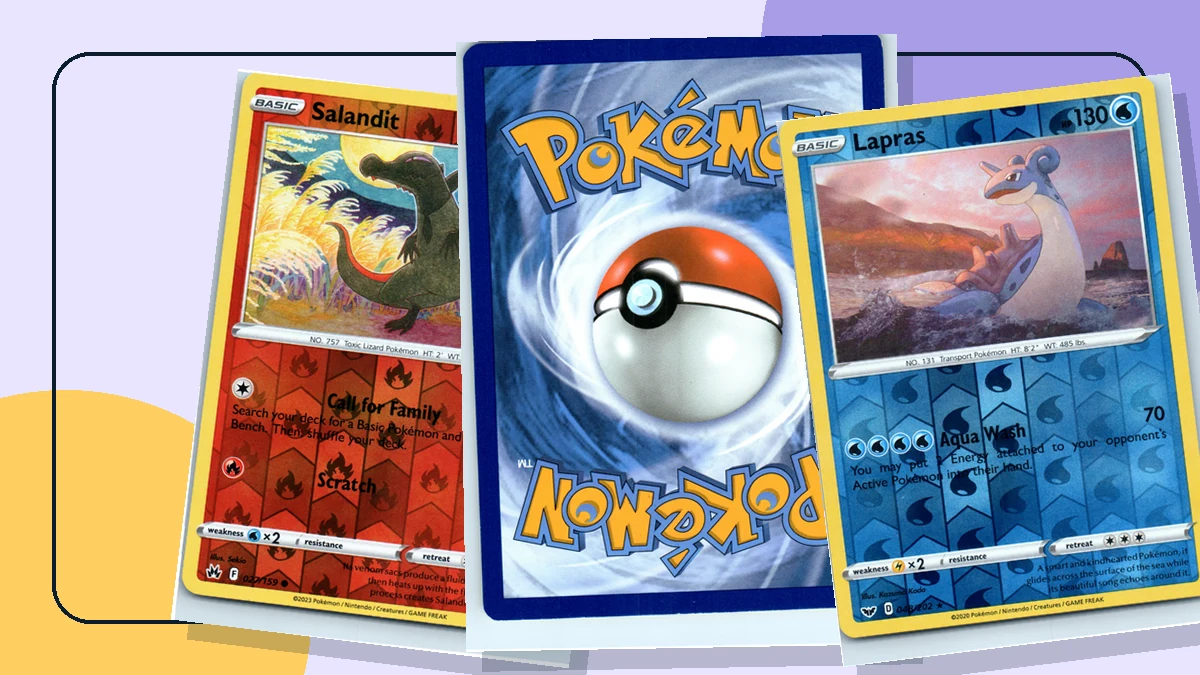

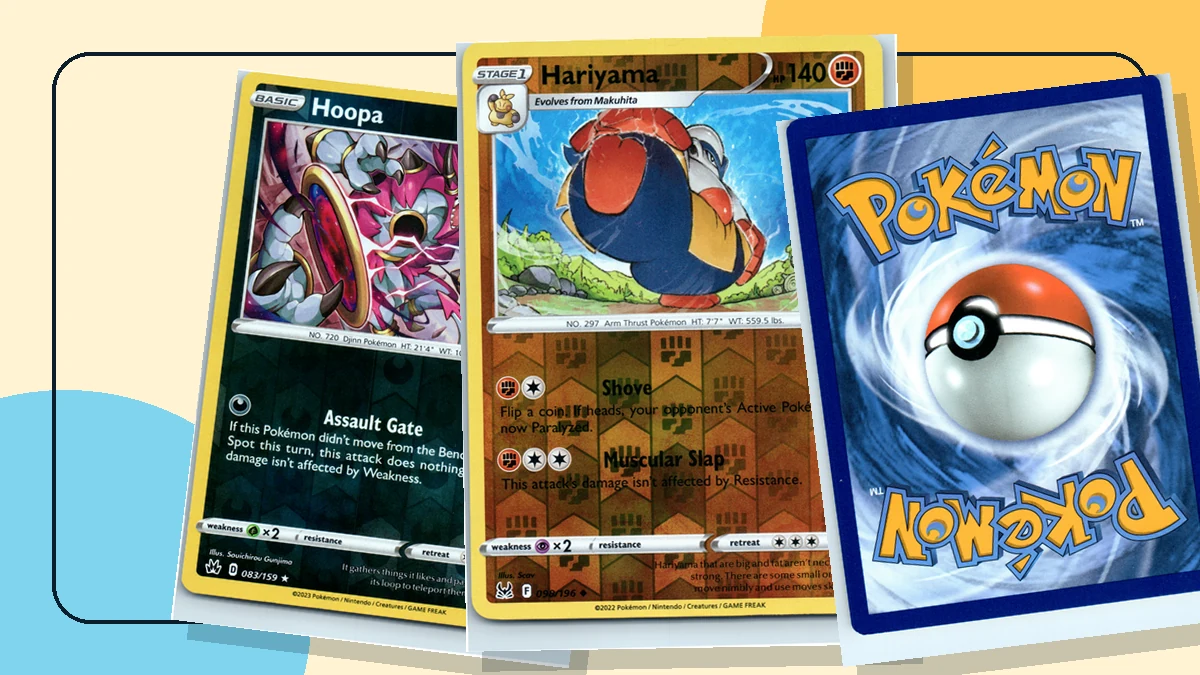
Read the collector number first
Look near the lower edge for a number such as 23/182. The first number identifies the card within its set. The second is the advertised size of the main set. A first number greater than the second usually points to a secret card, but it does not identify the exact printing by itself.
Match the expansion mark and regulation mark
Older cards usually carry an expansion symbol near the right side or lower corner. Modern cards print a set code near the collector number. The regulation letter is different: it tells players about format legality, not which expansion produced the card. Confusing those two marks is a common cause of wrong listings.
Describe the physical variant
Check whether the artwork is foil, the card body is foil, the card is stamped, or the entire design uses a special texture. Regular, holo and reverse holo copies can share a collector number. Promotional stamps and product exclusive finishes may also reuse artwork from a normal set card.
Confirm the language and copyright line
Japanese and English sets are not always direct equivalents. Search within the correct language and compare the bottom copyright line. A familiar illustration can have a different number, rarity and release path in another market.
Use an exact search
Search the card name followed by its collector number, for example Pikachu 23/182. Then compare the result with the official Pokémon card database or a reputable marketplace catalog. Do not price from the first visually similar result. Confirm the set, language, finish and condition before looking at sold copies.
If any of those pieces do not match, you have not finished identifying the card.
A listing checklist that prevents most mistakes
Before publishing, say the identity out loud in this order: name, set, collector number, language, finish and condition. Then compare the photograph with the catalog result one more time. This catches the common error where a scanner recognizes the artwork but selects a regular card instead of a reverse foil or promotional version.
When a card remains uncertain, do not guess. Photograph the full front, full back and the lower information line. Save it in an unidentified group until the symbol and number match a reliable database. A delayed listing is cheaper than a return for the wrong card.
Sources checked
Once you know what the card is
Identifying the card is the first half. The second is what condition it is in, because that moves the price further than rarity does: the condition and grading guide covers how to grade by eye, what centering measures and whether a card is worth submitting.
If you are deciding what to buy rather than what you already own, packs, boxes, bundles or singles compares the sealed products against buying the card outright. And if you are about to sell, the eBay profit calculator takes fees, postage and supplies out of the sale price.
Frequently asked questions
- Where is the set number on a Pokémon card?
It is printed near the bottom edge, usually as two numbers separated by a slash.
- What does a number like 203/198 mean?
The card number is higher than the advertised set size, which usually identifies it as a secret card.
- Can two Pokémon cards have the same artwork?
Yes. Reprints, promotional versions and cards in different languages can reuse artwork while changing the number, finish or set.
Pokémon card rarity symbols explained
The rarity mark describes how a card sits inside its original set. It does not promise a high price, and it does not replace the collector number or physical finish when you identify a card.

The three traditional symbols
A circle identifies a common card. A diamond identifies an uncommon card. A star identifies a rare card. These marks are usually printed near the collector number. Older sets and unusual products can place them elsewhere or omit them, so the card's era matters.
Modern rarities use more specific marks
Current sets can include double rare, illustration rare, special illustration rare, ultra rare and hyper rare cards. The official database also recognizes categories such as ACE SPEC rare, shiny rare and promotional cards. Not every expansion uses every category.
Reverse foil is a finish, not a separate rarity
A common, uncommon or rare card can appear as a reverse foil. The foil covers the card body while the main illustration remains mostly unfoiled. That copy usually keeps the same collector number and base rarity as the regular version. Calling every shiny card ultra rare produces inaccurate listings.
Secret cards reveal themselves with the number
A collector number above the printed set total, such as 203/198, signals a card beyond the advertised main checklist. Some collectors use secret rare as a broad description, but the modern official rarity might be illustration rare, special illustration rare or hyper rare. Use the exact label for the set.
Why a rare card can still be inexpensive
Price follows demand, condition, supply, character popularity, artwork and playability. A popular illustration rare can outsell a technically scarcer card that few people collect. Treat rarity as a catalog fact. Treat value as a market question that needs recent comparable sales.
Read rarity together with the set checklist
The same visual treatment can receive different names across eras. Full art, secret rare and illustration rare are useful collector terms, but the official label for the specific expansion should lead the inventory record. This is especially important when a marketplace combines several generations of rarity into one filter.
For a new set, download or save the official checklist before opening products. Mark each regular and parallel version separately. The checklist turns a pile of shiny cards into a collection you can audit, trade and complete without buying the same variant twice.
Sources checked
Frequently asked questions
- What does a black star mean on a Pokémon card?
It traditionally identifies a rare card within that set.
- Is a reverse holo card rare?
Reverse holo is a finish. Common, uncommon and rare cards can all have reverse holo versions.
- Does rare always mean valuable?
No. Demand, condition, supply, artwork and competitive use have a major effect on price.
What the numbers on a Pokémon card mean
A Pokémon card carries gameplay numbers, catalog numbers and legal marks in the same small rectangle. Reading them in the right order makes identification much easier.

The collector number identifies the card
A number such as 42/182 means card 42 in a main checklist advertised as 182 cards. This is the number to include in a search, inventory record or sales title. It separates cards that share a name but belong to different sets.
A number beyond the set total signals an extra card
If the first number is higher than the second, the card sits beyond the advertised main set. Collectors often call these secret cards. Modern sets divide them into more exact rarities, so use the official rarity label when one exists.
HP and attack damage belong to the game
The number beside HP shows how much damage the Pokémon can take before it is Knocked Out. Numbers beside attacks show base damage, but symbols and written effects can add conditions or change the final amount. None of these numbers identify the printing.
The regulation letter is not a set number
Modern cards display a boxed letter near the bottom. That mark helps determine whether a card is legal in Standard play. It does not tell you the rarity and it is not part of the collector number. A reprinted card can return with a newer regulation mark.
Use the copyright year carefully
The year along the bottom can help place a card in an era, but it is not always the retail release year a collector expects. Search with the card name, collector number and set mark before relying on the copyright line alone.
An example from search to inventory
Suppose a card reads 203/198. Search the Pokémon name with that complete number, confirm the expansion code beside it and compare the artwork. If the result shows a special illustration rare, record that exact rarity. The HP and attack damage never need to enter the sales title because the collector number already separates this printing from other cards with the same name.
For older cards with no modern set code, use the expansion symbol and copyright line together. A symbol alone can be tiny or poorly printed in a photograph. Two matching clues are much safer than one.
Sources checked
Frequently asked questions
- What does 25/102 mean on a Pokémon card?
It means card 25 in a set whose advertised main checklist contains 102 cards.
- Why is my card number higher than the set total?
It is an extra card beyond the main checklist, often described as a secret card.
- What is the letter near the bottom of a Pokémon card?
It is a regulation mark used to determine format legality for play.
Pokémon promo cards explained
Promo describes how a card entered the market, not a promise that it is scarce. Some are packed into widely available boxes. Others are tied to a short event, retailer or competitive season.

Black Star promos use their own numbering
English Black Star promotional cards usually carry a star marked PROMO and a code tied to their era. That code identifies the promotional series, not a normal expansion. Search the code with the Pokémon name for an exact match.
Product promos are visible before opening
Collection boxes, tins and Elite Trainer Boxes often include a foil card shown through the package or listed in the contents. These cards can be exclusive artwork, an alternate finish or a stamped version of a set card. Save the product name in your records because it explains the release path.
Retail and event promos need the stamp
A gift with purchase, league card or prerelease card may reuse the normal collector number while adding a retailer, event or set stamp. That stamp is the difference. A sales title that omits it can compare the card with the wrong market.
Distribution determines scarcity
A promotion that ran nationwide for weeks can be easier to find than a normal chase card. A local event card can be much harder. Research the dates, locations and purchase requirement before calling a card limited.
Check legality separately
Play Pokémon maintains a promotional card legality reference. A promo can be legal because its text matches a current card, or illegal because it has not reached its legal date. Collectibility and tournament legality are separate questions.
Save the story with the card
A promo is easier to understand when the collection record includes the retailer, event, product and release date. Keep the sealed wrapper or purchase receipt when it adds useful provenance. Years later, that information can matter more than the generic word promo.
If a card came with a product, resist separating the identity from the product too early. Two visually similar promos can have different stamps or release channels. A short note now prevents the card from becoming an unsourced variant later.
Sources checked
- Official Pokémon TCG card database
- Play Pokémon rules and resources
- Official Pitch Black promo announcement
Frequently asked questions
- What is a Black Star Promo Pokémon card?
It is a promotional card from a separately numbered series, usually marked with a black star and the word PROMO.
- Are all promo cards valuable?
No. Value depends on distribution, demand, condition and how many copies reached collectors.
- Can promo cards be used in tournaments?
Some can. Check the current official promotional card legality list and the card's regulation status.
Holo versus reverse holo Pokémon cards
A traditional holo card puts foil inside the artwork window. A reverse holo usually puts foil across the card body around that window. Modern patterns vary, but that location remains the quickest useful test.

What a holo card looks like
On a traditional holo rare, the illustration area reflects light while much of the text box and border remain normal. New eras sometimes extend texture or foil beyond that simple boundary, so compare the card with an official image from the same set.
What a reverse holo card looks like
A reverse holo moves the shine to the area outside the main illustration. The pattern can cover the background, type symbols or set specific graphics. The artwork window is usually the calmer part of the card. Reverse holo copies often exist for common and uncommon cards as well as rares.
Why a scan can be misleading
Scanners and soft front lighting can remove most visible sparkle. Photograph the card at a slight angle under a broad light, then capture a second straight image for condition. A listing should never use glare to hide scratches, print lines or dents.
How to name the variant
Record the set, collector number and then the finish: regular, holo, reverse holo or another official parallel. Do not assume that the rarest looking finish is the most valuable. Check sold listings for the exact variant and condition.
Special patterns need the set name
Poké Ball patterns, Master Ball patterns, stamped cards and textured illustration cards can look like ordinary reverse foil in a poor photograph. The expansion checklist is the final reference. If the pattern changes the official variant, include it in the listing title.
How to photograph foil honestly
Use one straight photograph that shows the whole card without dramatic glare. Add a second image from a shallow angle so the buyer can see the foil pattern. For a valuable card, add another angled view in the opposite direction. Surface scratches that disappear under one light often appear under the other.
Do not increase contrast until the card looks more reflective than it is. Editing should correct exposure and color, not invent texture. A neutral photograph may look less exciting, but it creates fewer returns and more trust.
Sources checked
Frequently asked questions
- What is the difference between holo and reverse holo?
A traditional holo shines mainly in the artwork window. A reverse holo shines mainly on the card body around the artwork.
- Are reverse holo cards always more valuable?
No. They are often common pack variants. Value depends on the exact card, set, condition and demand.
- Can holo and reverse holo cards share a number?
Yes. Many regular and reverse holo variants use the same collector number.
First Edition, Shadowless and Unlimited Pokémon cards
First Edition, Shadowless and Unlimited are not general condition grades. They describe printings connected to the 1999 English Base Set, and the differences are visible when you know where to look.

First Edition has the stamp
An English First Edition Base Set card carries a small Edition 1 stamp to the lower left of the artwork. Base Set First Edition cards also use the early layout that collectors call Shadowless. A stamp on a card from a later expansion can still indicate First Edition, but Shadowless is a Base Set distinction.
Shadowless lacks the artwork shadow
On an Unlimited Base Set card, the illustration frame casts a dark shadow along its right and lower edges. Shadowless cards lack that shadow. Their colors, copyright line and some text details also differ, which helps when a photograph makes the border difficult to judge.
Unlimited is the familiar mass printing
Unlimited Base Set cards have the shadow and no First Edition stamp. They are real Base Set cards, not later Base Set 2 cards. Base Set 2 has its own expansion symbol and should be cataloged separately.
Do not authenticate from one detail
Counterfeiters know that the stamp attracts attention. Compare the font, energy symbols, color, card stock, copyright line and back with a verified reference. A convincing stamp does not rescue a card whose printing is otherwise wrong.
Condition still controls the final comparison
Print version can create a large difference in demand, but a damaged First Edition card and a clean Unlimited card serve different buyers. Identify the printing first, then compare recent sales in the same condition or grade.
The safest order for a vintage inspection
Begin with the card dimensions and back. Then check the First Edition stamp, artwork frame, energy symbols, fonts and copyright line. Compare the result with a verified card of the same number. Authenticating from the price signal first makes people see what they hope is there.
Never rub, bend, tear or shine a harsh light through a valuable card to perform an internet test. Those tricks can damage a genuine copy and still produce ambiguous results. For a high value card, professional authentication is safer than destructive certainty.
Sources checked
Frequently asked questions
- Are all First Edition Pokémon cards Shadowless?
No. English Base Set First Edition cards use the Shadowless layout, but First Edition stamps also appear on later sets that are not called Shadowless.
- How do I spot a Shadowless Base Set card?
Look for the missing drop shadow along the right and bottom of the artwork frame, then confirm the early copyright and text layout.
- Is Base Set 2 the same as Unlimited?
No. Base Set 2 is a separate expansion with its own set symbol.
Japanese versus English Pokémon cards
Japanese and English Pokémon cards belong to the same game, but their sets are not simple translations of one another. Release dates, checklists, pack structures, promotions and rarity systems can differ.
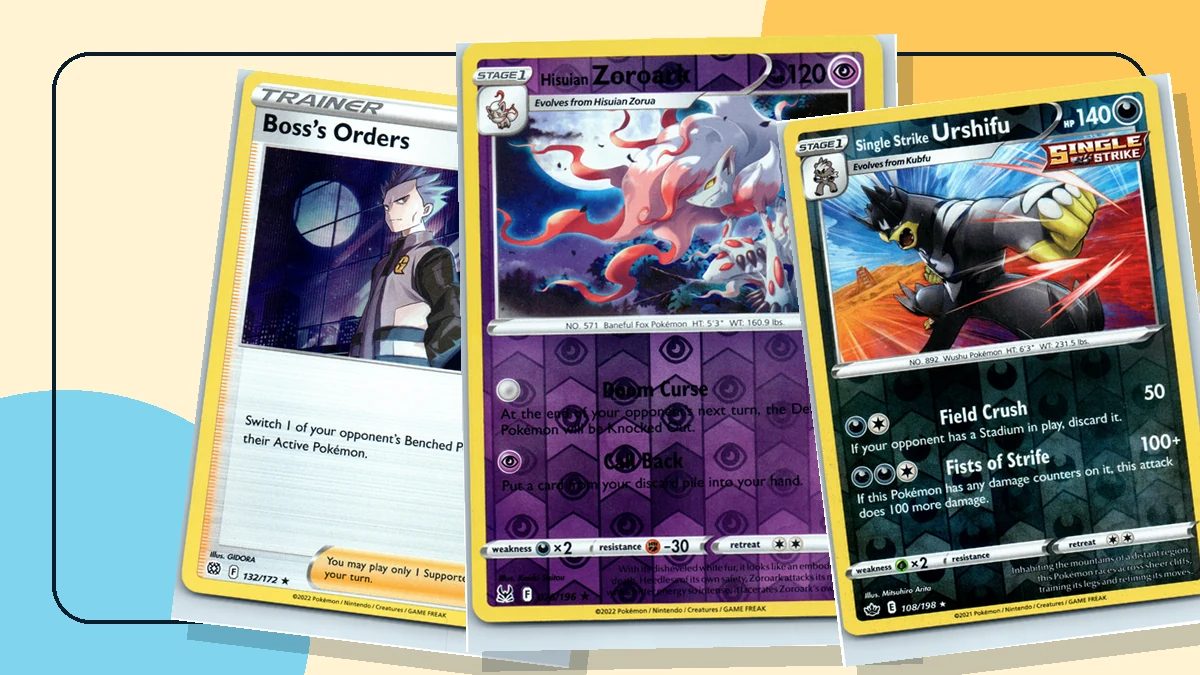
Sets do not always match one for one
An English expansion can combine material from more than one Japanese release. A Japanese card can therefore arrive earlier, use a different collector number or belong to a smaller checklist. Search within the correct product line instead of assuming the English set name.
Pack contents and guarantees can differ
The number of cards in a pack, the arrangement of rarities and the existence of a guaranteed box hit depend on the product and era. Never transfer a pull rate claim from a Japanese box to an English box without a source for both.
Print preferences are not universal facts
Collectors often prefer Japanese texture, color or centering on particular releases. That preference should not become a blanket promise that every Japanese card has better quality. Judge the card in front of you and show both sides in a listing.
Tournament language rules depend on the event
A card being official does not automatically make its language legal at every event location. Players should check the current Play Pokémon tournament rules and bring any required reference text. Collectors who never play can choose purely by art, budget and availability.
Choose by collecting goal
Japanese cards are attractive for early access, Japan only promotions and compact set structures. English cards are easier to read for many North American collectors and often have a larger local resale audience. Neither language is the correct answer for every collection.
Keep separate inventories by language
Give each language its own set name and checklist in your catalog. Do not place a Japanese card into the empty English slot simply because the artwork matches. That shortcut becomes confusing when you price the collection or try to finish a master set.
When buying online, confirm whether the listing photograph shows the actual card or a catalog image. Ask for the back when condition matters. Japanese cards use a different back design from modern international cards, which is normal and should not be mistaken for a counterfeit by itself.
Sources checked
Frequently asked questions
- Are Japanese Pokémon cards real Pokémon cards?
Yes, when produced by the official Japanese Pokémon Card Game. Authenticity still needs to be checked like any other card.
- Are Japanese and English sets identical?
No. Set composition, collector numbers, pack contents and promotional releases can differ.
- Can I use Japanese cards in an English tournament?
Language legality depends on the current rules for the event and region. Check the official tournament handbook before playing.