
The short answer
Do not throw anything away and do not clean anything. Wiping a card or putting it in the wrong sleeve can cost more value than the sleeve saves.
Then look for three things: cards dated 1999, cards with EDITION in a black circle, and any holo Charizard. Those decide whether you are holding a bulk lot or something that deserves an appraisal.
Inheriting a collection is different from finding your own. You do not know what the person cared about, what they paid, or whether the careful boxes mean value or just care.
First, what not to do
Do not clean the cards. Every wipe puts fine scratches on the surface, and on a card worth grading that is the difference between two grades and a few hundred dollars.
Do not sort by rubber band, ever. Bands dent the edges of the top and bottom cards permanently.
Do not take the graded ones out of their cases. The plastic slab is the value. Cracking it destroys the grade.
Store the lot somewhere dry and stable while you work through it. Humidity and heat do slow, invisible damage.
The three signals that change everything
| Signal | Where to look | What it means |
|---|---|---|
| 1999 date | Tiny copyright line at the bottom | Base Set era, the one period where even commons can matter |
| EDITION in a black circle | Left side, below the artwork | First edition. Multiplies value several times |
| No symbol beside the artwork | Right of the picture, mid card | Base Set or Shadowless. Get these looked at |
| A plastic slab with a number | The whole card is sealed | Already graded and already appraised. Do not open |
| Japanese text | Everywhere | Not automatically worth less. Some Japanese prints are worth far more |
If none of those appear anywhere in the collection, you almost certainly have a modern bulk lot. That is not bad news, it just changes the plan.
Two things people get wrong about inherited collections
Japanese cards are not worth less. The print quality is better and some Japanese exclusives sell for far more than the English version. Do not dump them into the bulk pile because you cannot read them.
A tidy collection is not automatically a valuable one. Someone who sleeved and sorted every card was being careful, not necessarily investing. Plenty of immaculate binders are full of commons, and plenty of shoeboxes hold a 1999 holo.
Judge the cards, not the housekeeping.
What a modern collection is actually worth
Most collections built after 2010 are made of reverse holos and commons. They have real value in aggregate and very little per card.
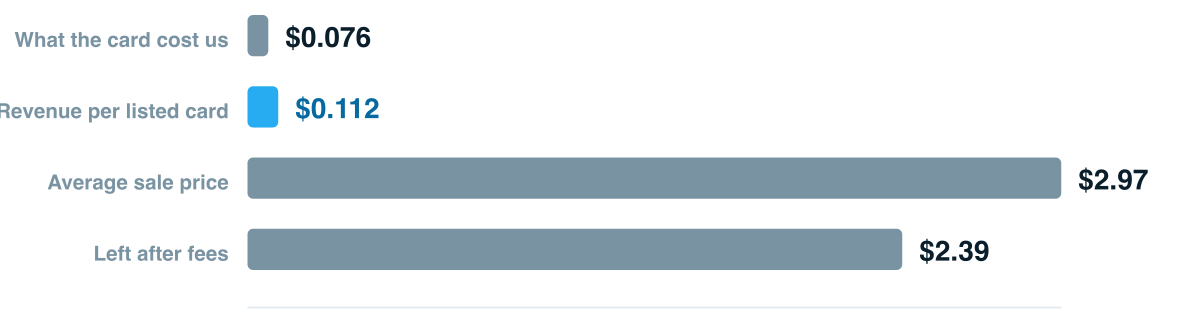
In our store the average single sells for $2.86 and 61% go at the $1.99 minimum. A thousand card box is worth real money as a lot and almost nothing card by card, which is the whole reason bulk exists as a category.
Getting it valued without getting taken
Ask two buyers, not one, and ask each to explain the number. A buyer who says "collections go for 60% of sold value, and here is what I think yours sells for" is doing the same arithmetic we do on our own offers page.
If the collection includes graded cards or anything from 1999, get those priced separately from the rest. Mixing a $300 card into a bulk price is the most common way value disappears quietly.
And if the collection belonged to someone who mattered to you, there is no obligation to be efficient about it. Keep the Charizard. Sell the rest when you are ready.
Frequently asked questions
- What should I do first with an inherited Pokémon collection?
Nothing that touches the cards. Do not clean them, do not use rubber bands and do not open graded slabs. Store the collection somewhere dry and stable, then sort it by sight only.
- How do I know if an inherited collection is valuable?
Look for three printed signals: a 1999 date, the word EDITION in a black circle, and no set symbol beside the artwork. Any of those means the collection deserves a proper appraisal rather than a bulk price.
- Should I clean old Pokémon cards before selling?
No. Wiping a card leaves fine surface scratches that cost grades, and a grade can be worth hundreds of dollars on a valuable card. Buyers expect old cards to look old.
- How do I get a collection valued fairly?
Ask two buyers, not one, and ask each to explain their number. Have graded and pre 2000 cards priced separately from the bulk, because mixing a valuable card into a lot price is the most common way value disappears.