Storm Emeralda's numbered checklist stops at 076. Everything printed after that, cards 077 through 113, is the secret rare tier: 37 cards split into four separate rarities. We already covered the full 113-card checklist when it went public. This is the part that checklist could only summarize: which of those 37 cards actually move money, and why the exact same Pokémon can show up at four completely different prices.
| Tier | Cards | Numbers | Release-day price range |
|---|---|---|---|
| Art Rare | 12 | 077 to 088 | ¥2,000 to ¥2,800 |
| Super Rare | 18 | 089 to 106 | ¥2,000 to ¥8,000 |
| Special Art Rare | 6 | 107 to 112 | ¥3,000 to ¥138,000 |
| Mega Ultra Rare | 1 | 113 | ¥298,000 |
Twelve Art Rares are the cheapest way in
Art Rares run from 077 to 088, twelve cards total, and they're where most buyers actually start. Each one takes a Pokémon that never got a flashy treatment in the main set and gives it a full-bleed illustration instead of the usual boxed layout. Kecleon, 088/076, is the clearest example of what that actually looks like.
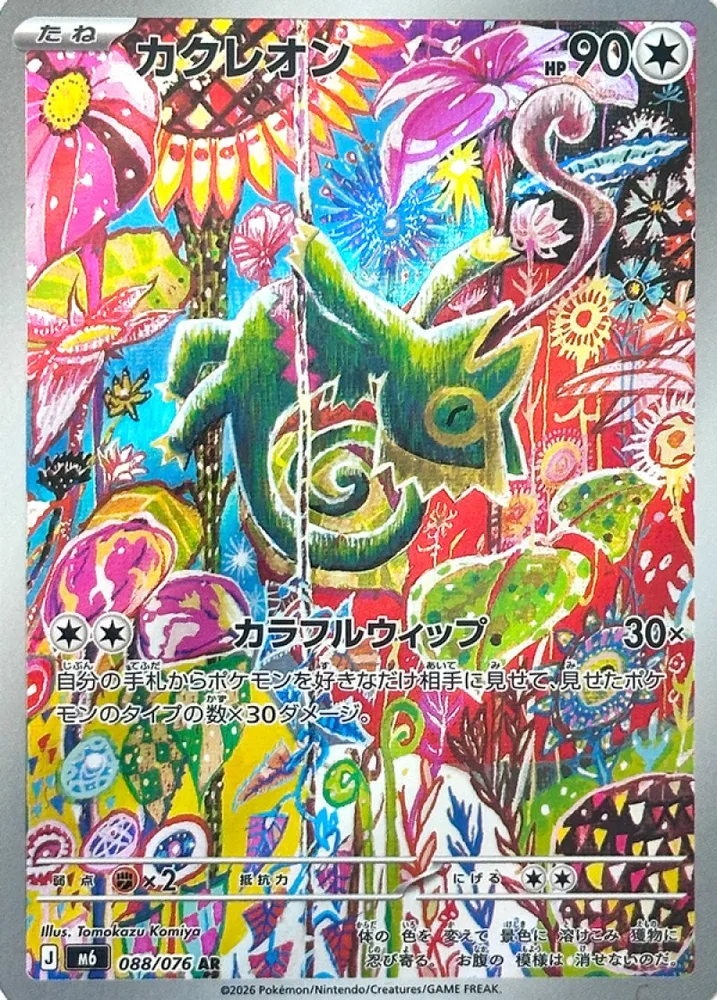
Tomokazu Komiya painted Kecleon surrounded by flowers instead of drawing it in a battle pose, and the card reads more like a gallery piece than a Pokémon card. That's the pitch for the whole Art Rare tier: you're paying for illustration, not for a rare attack or a tournament-relevant Ability. Kecleon's own attack, Colorful Whip, deals 30 damage for every Pokémon type shown from hand, harmless in a real match and beside the point here.
Groudon and Kyogre round out the tier's other end, Art Rares at 084 and 080. Neither card does anything a deck actually needs, they're plain Basic Pokémon with ordinary attacks. What sells them is the pair itself, two rival Legendaries painted by two different artists, Ryota Murayama on Groudon and Nurikabe on Kyogre, landing at nearly identical prices.
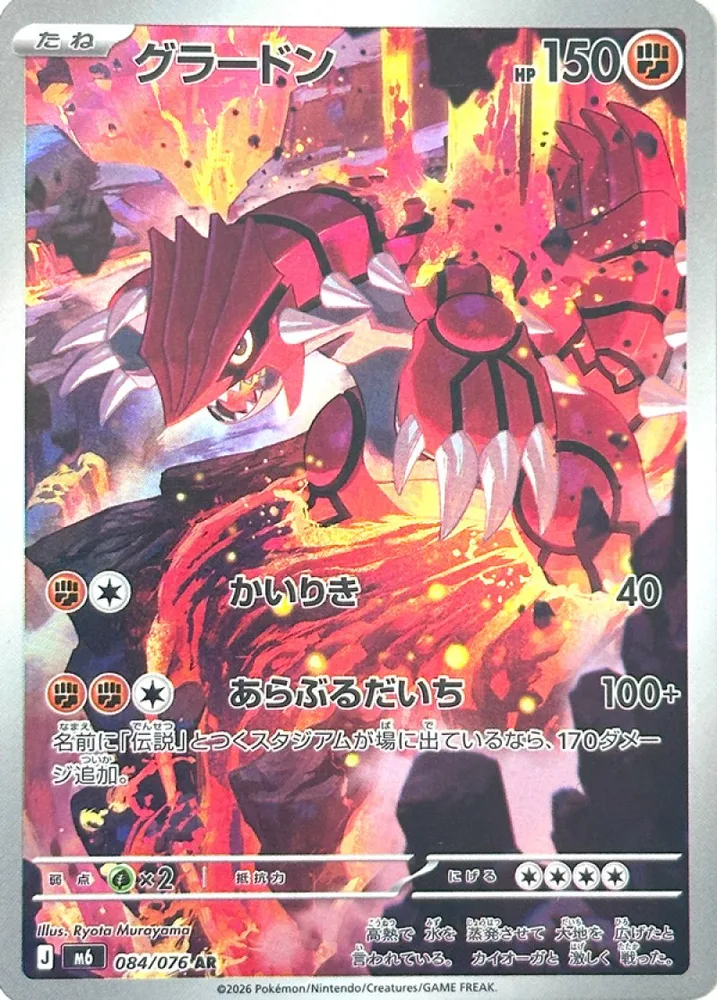
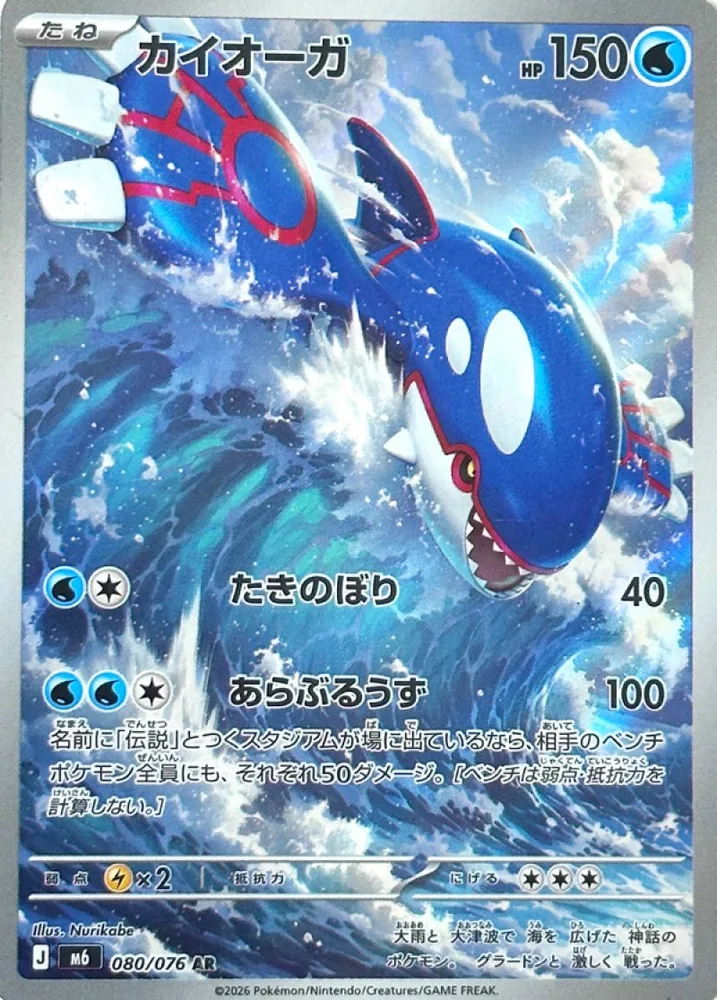
Twelve Art Rares at roughly ¥2,000 to ¥2,800 apiece is the actual floor of Storm Emeralda's secret rare tier. That's real money for anyone pulling boxes at scale, but it's a different conversation entirely from the cards two rarities up.
One Pokémon, four rarities
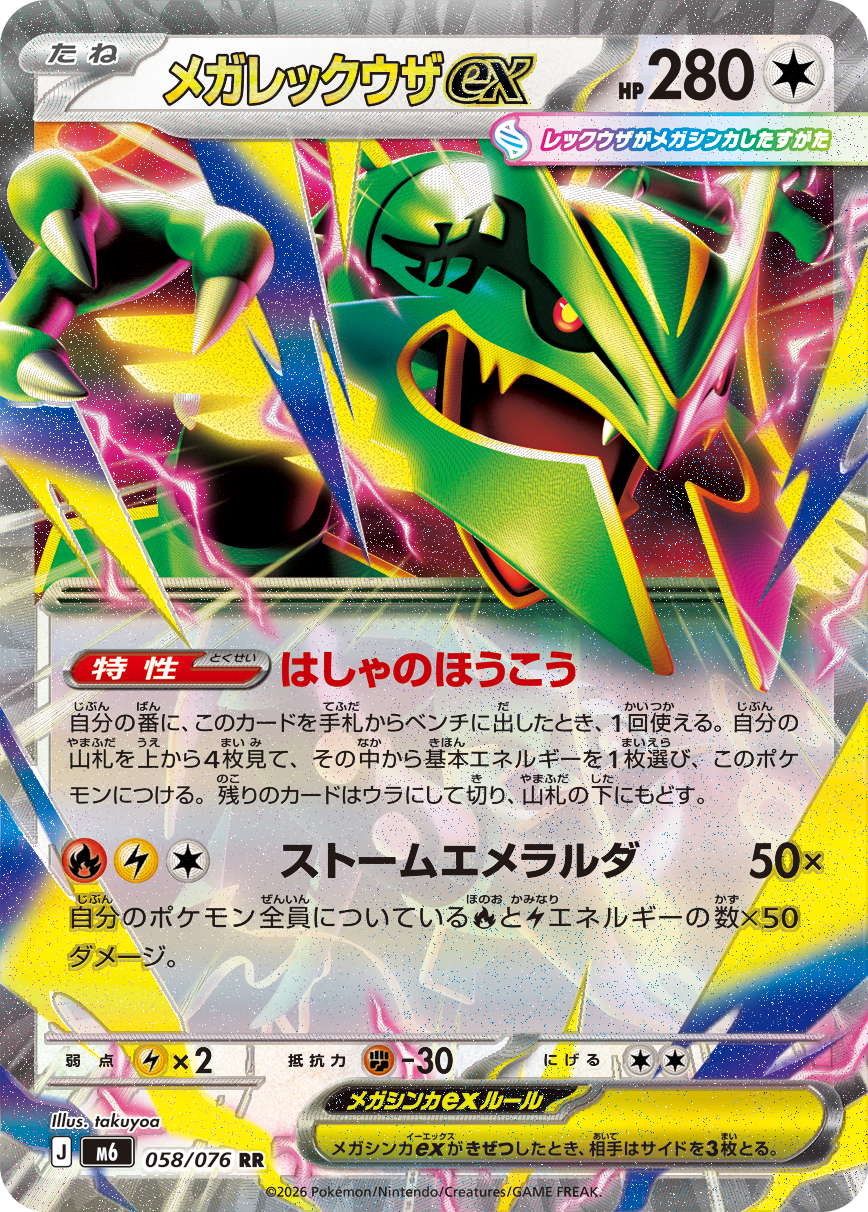
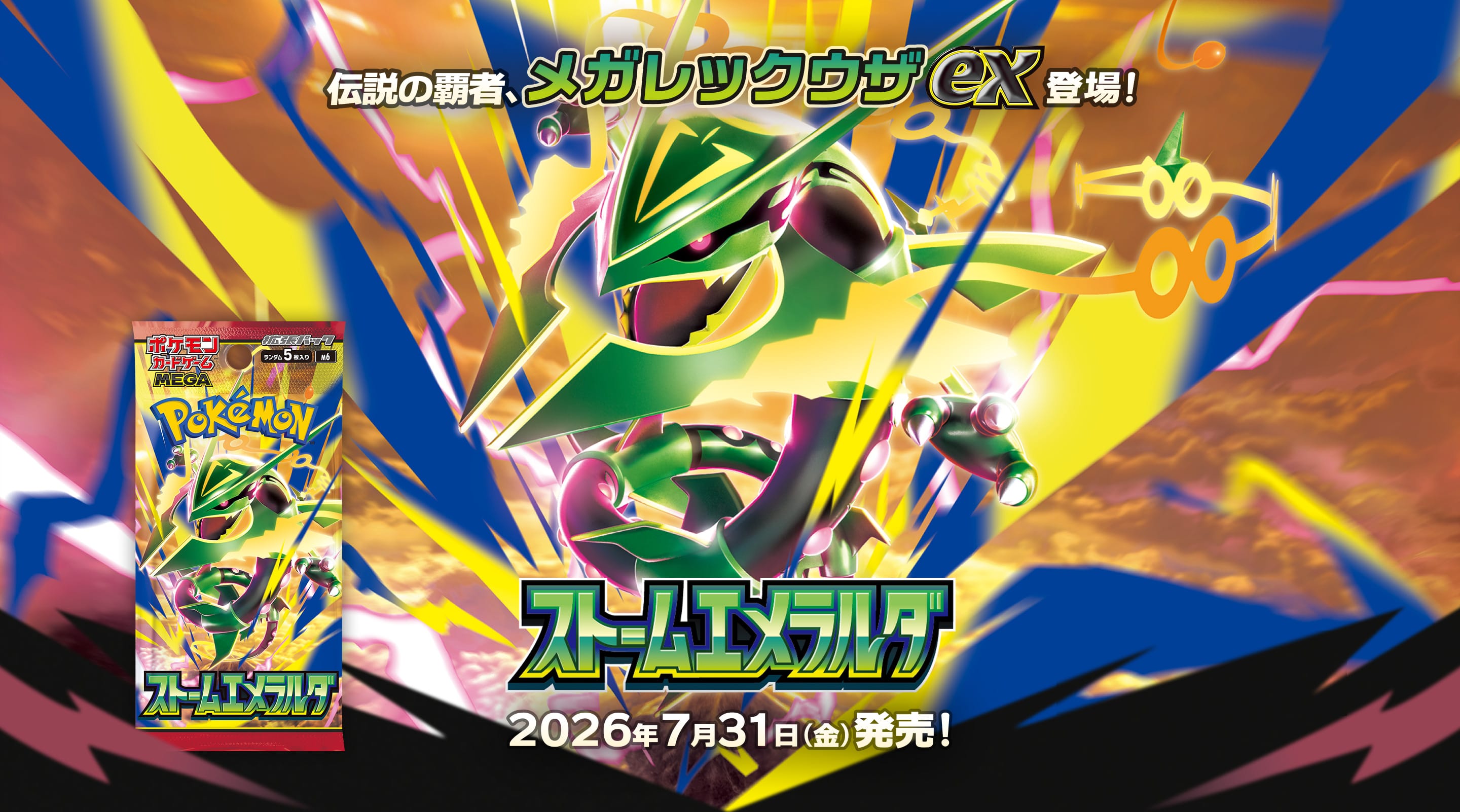
Only one card in the entire 113-card set gets printed at every single rarity tier, and it's the one on the box. Mega Rayquaza ex appears as a regular Double Rare at 058/076, again as a Super Rare at 095/076, again as a Special Art Rare at 110/076, and one more time as the set's only Mega Ultra Rare at 113/076.
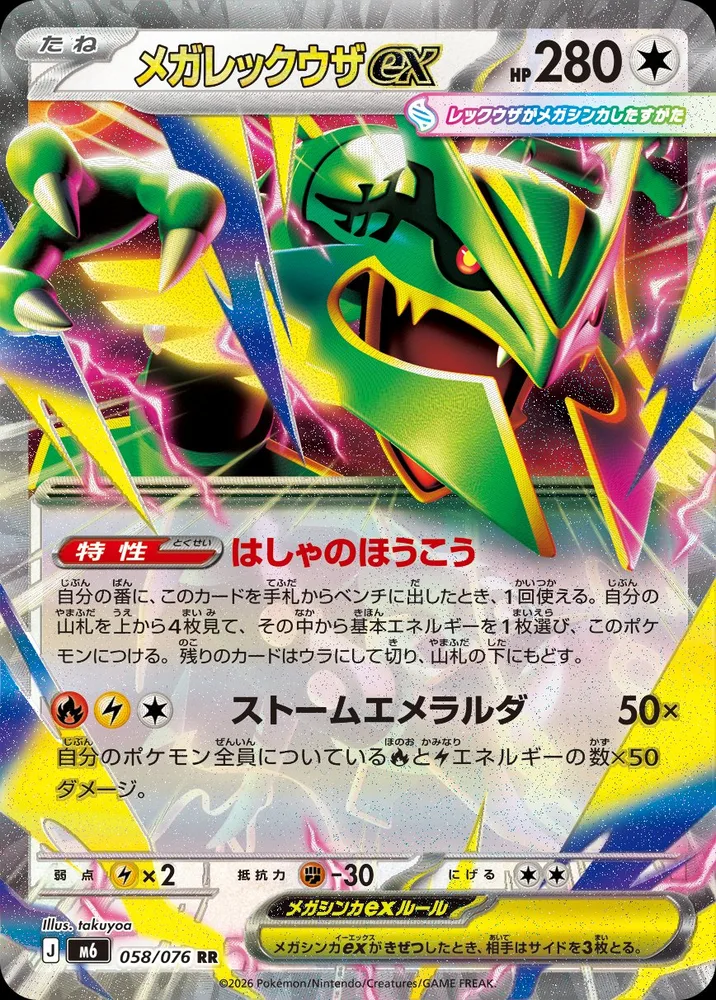
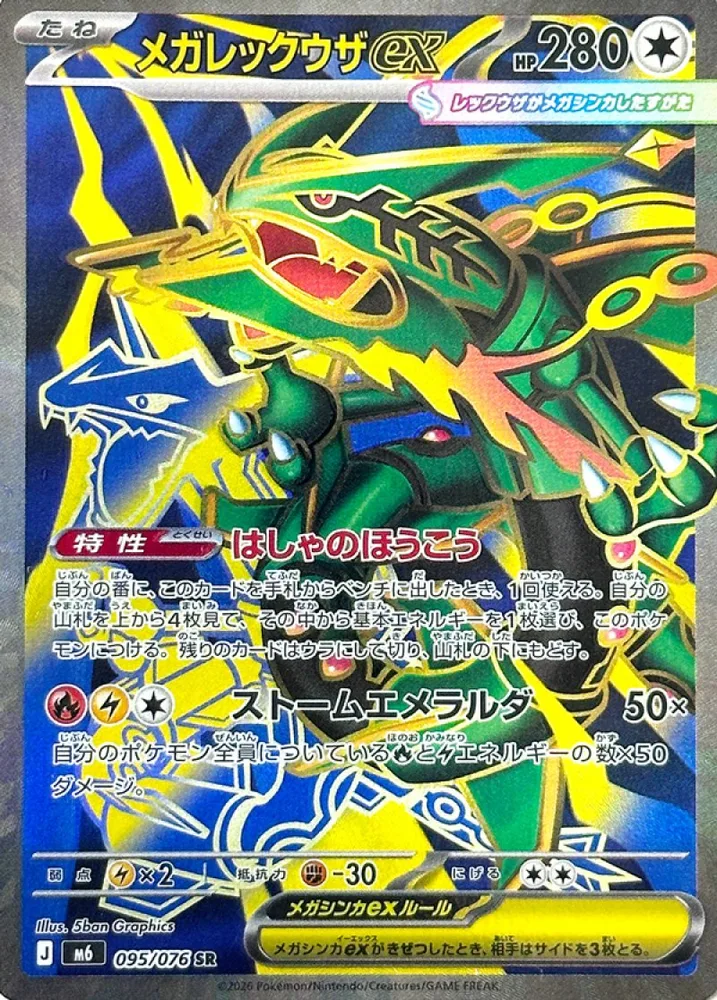
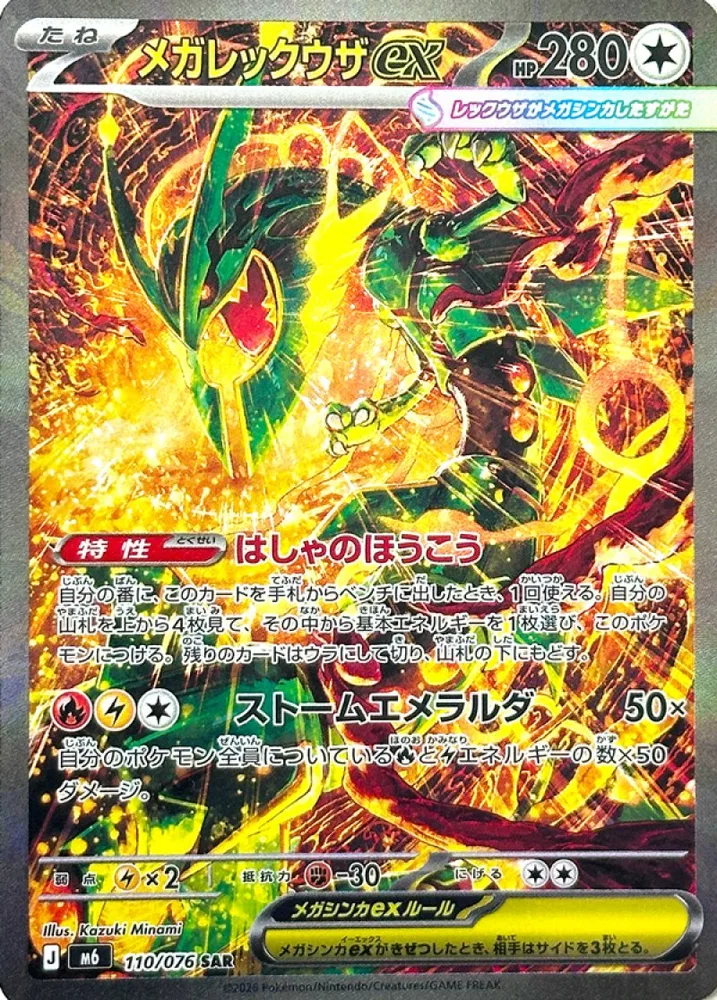
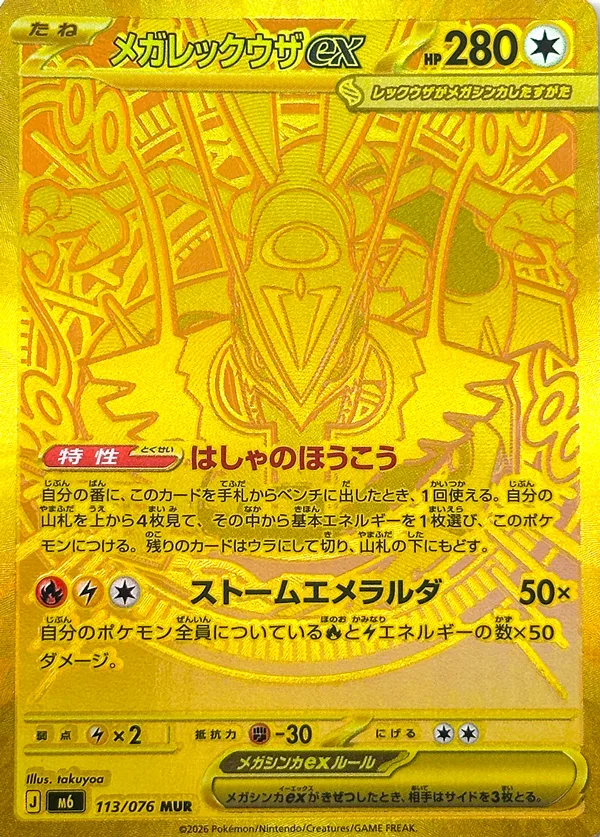
Three different illustrators worked on those four cards. Takuyoa drew both the plain Double Rare and the gold Mega Ultra Rare, an unusual choice since most sets hand the top rarity to a different artist entirely. 5ban Graphics handled the Super Rare. Kazuki Minami, who won the Grand Prize in the 2024 Pokémon TCG Illustration Contest, painted the Special Art Rare that most collectors actually picture when they hear "Mega Rayquaza ex."
That's roughly a 596 times price gap between the cheapest and the most expensive printing of the exact same Pokémon: same HP, same Ability, same attack. Nothing about the card changes except the foil treatment and the artwork wrapped around it. If you only remember one number from this article, that's the one worth remembering.
The other five Special Art Rares
Special Art Rares run from 107 to 112, six cards total, and Mega Rayquaza ex is only one of them. Mega Golisopod ex and Mega Golurk ex both get their own SAR, at 107 and 109, alongside Raikou ex at 108.
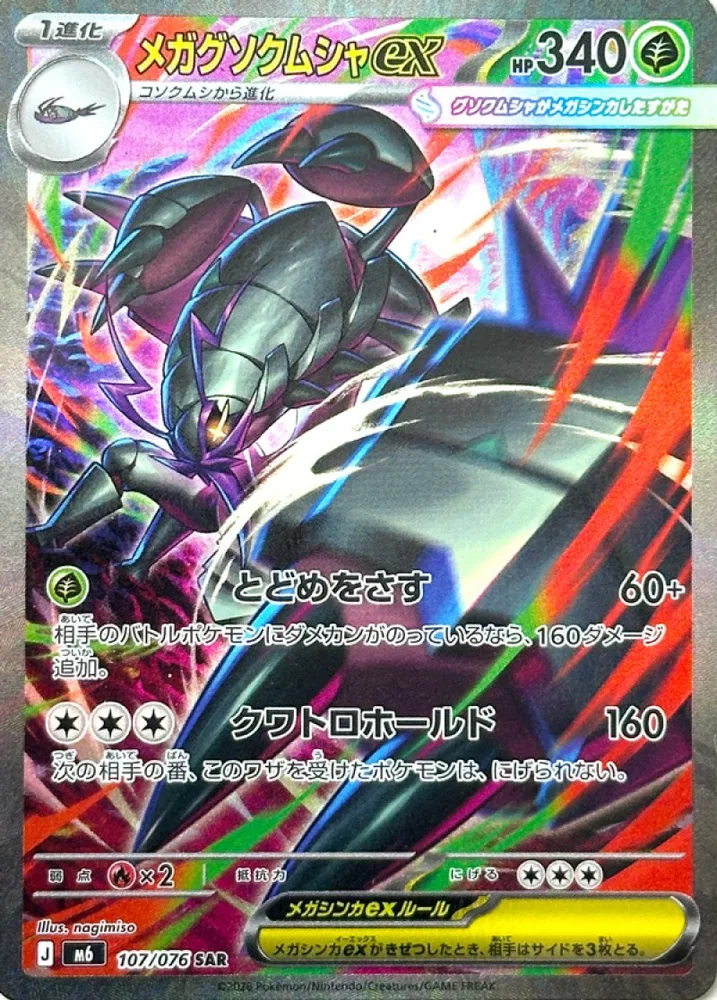
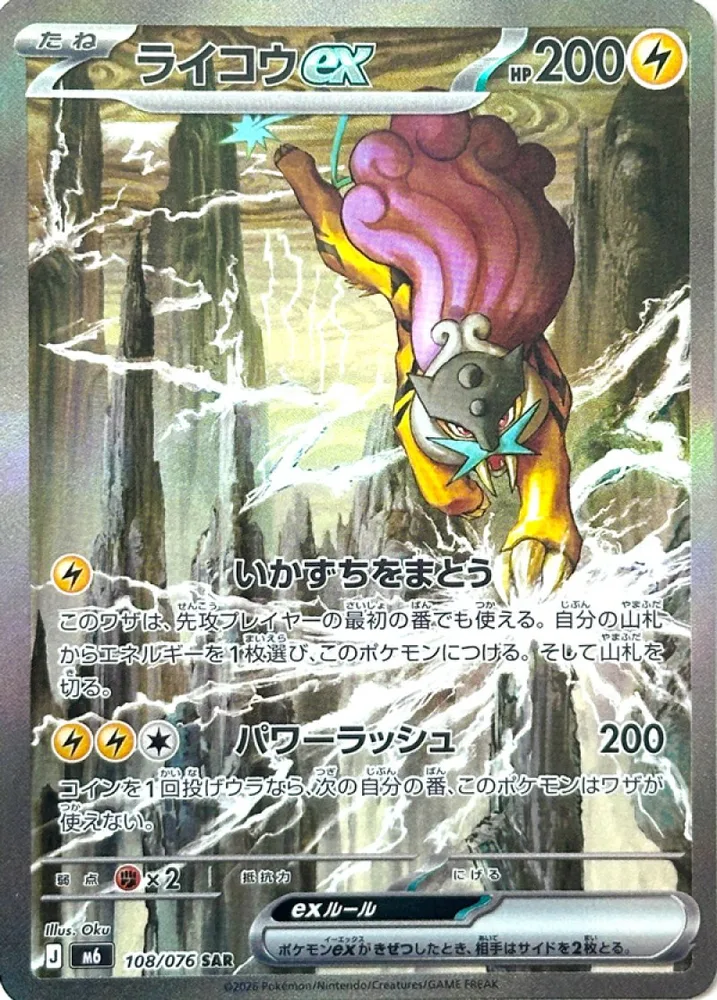
Raikou ex's SAR asked ¥16,800 on release day, the second-highest price in the whole set after the two Mega Rayquaza ex cards. Mega Golisopod ex's SAR sat at the opposite end, ¥3,480, barely above what the Art Rare tier charges. The six-card SAR tier isn't one price bracket, it's closer to three stacked on top of each other.
Two of the six SARs aren't Pokémon at all. Aarune, a Supporter that searches up to three Supporters or Stadium cards at once, earns its spot the normal way, it's a genuinely strong consistency piece. Zinnia's Trust is the outlier. The regular printing, 069/076, is an Uncommon that only switches your Active Pokémon and carries an Energy along with it, a card most decks never bother playing.
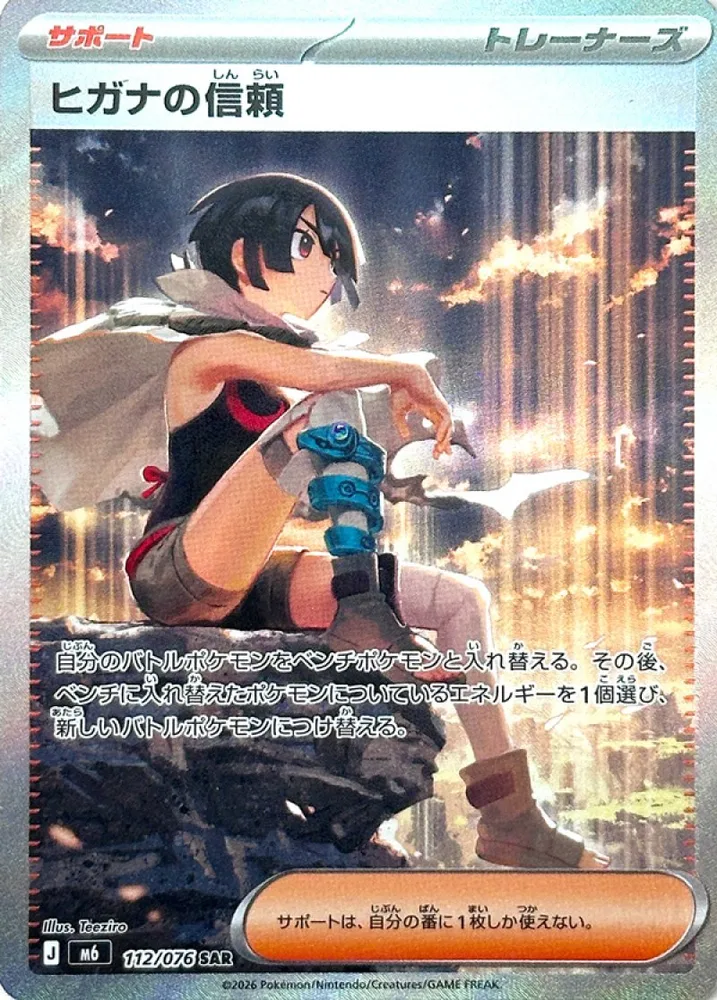
That same unremarkable Supporter jumps straight to Super Rare at 102 and Special Art Rare at 112, and the SAR asked ¥9,480 on release day, more than every Art Rare and more than Mega Golisopod ex's SAR. Nothing about the effect changed between the Uncommon and the Special Art Rare. What sells it is Zinnia herself, a character from the Delta Episode storyline with a fanbase that predates this set by over a decade. In this tier, rarity tracks the character at least as often as it tracks the card.
Day-one prices don't hold
Every price above is a release-day snapshot, and release-day snapshots move fast. Mega Rayquaza ex's SAR asked ¥138,000 on July 31 and had settled to roughly ¥54,880 for a near-mint raw copy by August 19, three weeks later, a drop of about 60%.
Raikou ex's SAR followed the same curve, from ¥16,800 down to around ¥7,000. Zinnia's Trust dropped from ¥9,480 to roughly ¥3,099. None of that means the cards got less scarce, the print run doesn't change after release. It means the release-week price carries a premium for being first, and that premium is the part that disappears once the initial rush cools off.
For anyone pricing singles rather than flipping day-one hype, the number three weeks out is the more honest one to build a listing around.
What this means if you're buying
The gap between a ¥2,000 Art Rare and a ¥298,000 Mega Ultra Rare is exactly the range that draws counterfeiters, and we've written separately about the fakes already circulating around Mega Evolution ex cards specifically. Etched gold foil on the MUR and the heavy texture on every SAR both show wear and scratches more easily than a standard holo pattern, so a stock photo on a listing tells you less than it would on a plain card.
If pulling the Mega Ultra Rare yourself is the actual goal, box math matters more than anything in this article. Our earlier coverage of Storm Emeralda's pull rates found the MUR and the SAR each landing twice across an early 46-box sample, meaning either specific card shows up only about once every 23 boxes. That number doesn't improve just because a card looks more affordable three weeks after launch.
The complete numbered breakdown, all 113 cards and every rarity between them, is in our full set list coverage. This piece only exists because that checklist raised a question a plain list can't answer: which of those 37 cards are actually worth tracking, and why.
Frequently asked questions
- How many secret rares does Storm Emeralda have?
37, split into 12 Art Rares, 18 Super Rares, 6 Special Art Rares and 1 Mega Ultra Rare, numbered 077 through 113.
- What is the most expensive Storm Emeralda secret rare?
Mega Rayquaza ex's Mega Ultra Rare, 113/076, asked around ¥298,000 on release day and held ¥300,000 to ¥350,000 through its first week.
- Why does Mega Rayquaza ex have four different versions?
It's the set's headline card. Pokémon printed it as a regular Double Rare, a Super Rare, a Special Art Rare and the set's only Mega Ultra Rare, the only card in Storm Emeralda to get all four tiers.
- Are Storm Emeralda's secret rare prices still dropping?
Early data says yes. Mega Rayquaza ex's Special Art Rare fell from roughly ¥138,000 on release day to about ¥54,880 three weeks later, and other Special Art Rares followed a similar curve.