
The short answer
Yes, the illustrator moves the price, and on modern cards it can move it more than the rarity does. A common card illustrated by a collected artist can be worth several times an identical rarity from the same set.
The names that consistently carry a premium include Mitsuhiro Arita, Yuka Morii, Kouki Saitou and Naoki Saito. The credit is printed in small type at the bottom of the artwork, usually as Illus. followed by the name.
This is the pricing factor almost nobody checks, and it is printed on the card itself. If you sort bulk, it is worth knowing before the cheap pile leaves the room.
Where to find it
Bottom left of the illustration on most modern layouts, in type small enough that people scanning for the card number miss it entirely. On older cards it sits under the artwork in the same line as the copyright.
It is data, like the set symbol and the number, and it belongs in your listing title or at least in the description. Buyers who collect an artist search by that name.
Why it moves price at all
Two reasons that compound. Some illustrators have a distinctive style that people collect across sets, which creates demand independent of rarity. And a handful of artists are associated with famously valuable cards, so their signature carries a halo onto everything else they drew.
Yuka Morii's clay sculpture pieces are the clearest example of the first case: they are instantly recognisable, they appear on ordinary rarities, and there is a real audience trying to complete them.
| Illustrator | Known for | Effect on a common |
|---|---|---|
| Mitsuhiro Arita | The original Base Set art, including Charizard | Strong premium, especially older work |
| Yuka Morii | Clay sculpted Pokémon, unmistakable | Collected as a set across rarities |
| Kouki Saitou | Detailed scenic backgrounds | Premium on full art and illustration rares |
| Naoki Saito | Dynamic action compositions | Premium on chase cards |
Where it does not matter
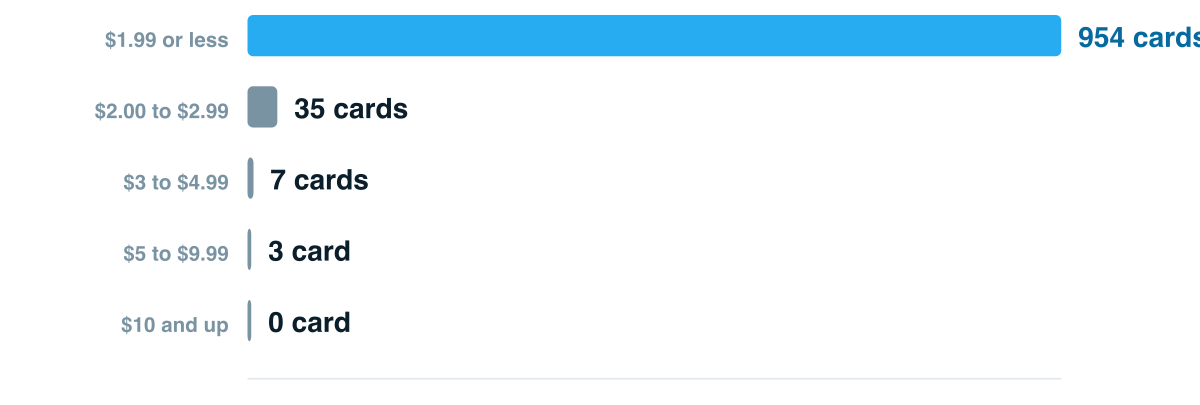
On a card already sitting at the price floor, the illustrator changes nothing, because the floor is set by what it costs to list rather than by what the card is worth. In our catalogue that is 97.5% of everything.
So this is not a reason to check every card in a bulk box. It is a reason to check the ones you were already going to list individually, where a name in the credit line can double the price.
How to use it when you sell
Put the illustrator in the listing title when the name is one people search. It costs nothing, it is factual, and it puts the card in front of an audience that is not searching by Pokémon name at all.
And when you are pricing, compare against completed sales of the same card by the same artist rather than the same card generally. Alternate art versions by different illustrators are different products with different prices, which is the same trap as pricing against the cheapest listing.
How people search by illustrator
The large catalogue sites let you filter by artist, and that is where this demand lives. Someone collecting Yuka Morii is not searching for a Pokémon, they are searching a name and buying whatever comes up.
The honest limit
We do not have hard numbers on illustrator premiums from our own sales, because our catalogue is overwhelmingly floor cards where the effect does not appear. Treat the table above as market knowledge rather than as our measurement, and check completed sales before pricing on it.
Frequently asked questions
- Does the illustrator affect a Pokémon card's value?
Yes, and on modern cards it can matter more than rarity. Collectors follow specific artists across sets, which creates demand for ordinary rarities drawn by those names.
- Which Pokémon card illustrators are most collected?
Mitsuhiro Arita, Yuka Morii, Kouki Saitou and Naoki Saito are among the names that consistently carry a premium, though the effect varies by card and set.
- Where is the illustrator printed on a card?
In small type at the bottom of the artwork, usually as Illus. followed by the name. On older cards it shares the line with the copyright.
- Should I put the illustrator in my listing title?
When the name is one people search, yes. It is factual, it costs nothing, and it puts the card in front of buyers who are not searching by Pokémon name.